Call anytime
(+91) 98410 31719
Blog Details
Husband Is Not Paying Maintenance — What Can Be Done and How to Get Relief ?
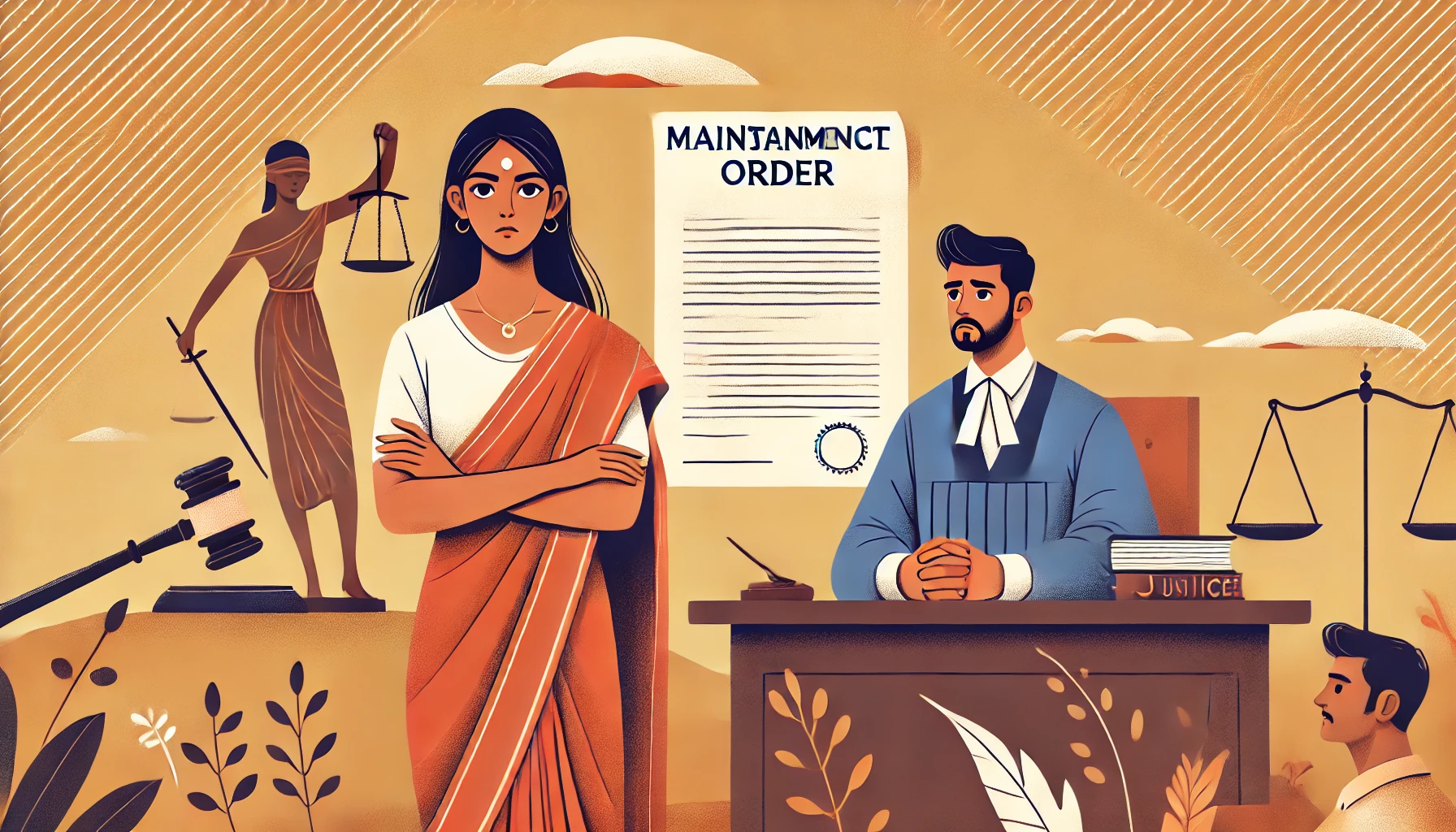
It is painful and exhausting when a woman, already facing the strain of separation or divorce, must also fight to receive the very maintenance that the court has already granted. Many women find themselves in this situation — where the husband deliberately evades payment, drags the matter through repeated appeals, or simply refuses to obey court orders. Years go by, and not a single rupee reaches the hands of the person for whom the relief was meant.
This is not just a legal issue — it is a question of dignity, survival, and faith in justice. Fortunately, the law in India provides several remedies to deal with such non-compliance and ensure that justice is not defeated by delay.
Understanding the Nature of Maintenance Orders
When a court grants maintenance — whether interim (temporary) or final — it is not a suggestion or a favour; it is a binding order. The husband is legally obligated to comply within the stipulated time. Non-payment is not a mere civil default; it is a violation of a judicial order, which can invite serious consequences including attachment of property, arrest warrants, and even imprisonment.
But the challenge often lies in the execution — when the husband, instead of paying, keeps appealing before higher courts, sometimes only to delay and avoid compliance.
1. Appeals and Their Effect — Does an Appeal Stop Payment?
A common misconception is that once an appeal is filed, the husband need not pay until the higher court decides. This is not correct. Filing an appeal does not automatically stay the maintenance order. Unless the higher court specifically grants a stay order, the husband must continue paying maintenance as directed by the lower court.
Therefore, if the husband has been appealing continuously for years without a stay order, the wife is fully entitled to initiate execution proceedings for recovery.
2. Execution Petition — The First and Most Effective Step
The law provides a clear mechanism for enforcing maintenance orders. A wife can file an Execution Petition in the same court that passed the order, demanding enforcement of the maintenance decree.
The court has wide powers to:
- Issue Warrants of Attachment — meaning the husband’s movable or immovable property can be attached and sold to recover arrears.
- Issue Warrants for Arrest — if the husband wilfully disobeys, he can be sent to civil imprisonment.
- Direct the employer to deduct maintenance from salary, if he is salaried.
- Order the bank to attach accounts or savings belonging to the husband.
In fact, under Section 125(3) of the Criminal Procedure Code (CrPC), if a person fails to pay maintenance without sufficient reason, the court can sentence him to imprisonment for up to one month for each month’s default.
3. Interim Maintenance — Ensuring Survival During Litigation
In long-drawn legal battles, waiting for the final outcome can be unbearable. The law therefore allows the wife to seek interim maintenance — a temporary relief granted during the pendency of the case to meet basic living expenses.
If a woman has already obtained an order for interim maintenance but the husband is not paying, she can approach the same court and request enforcement. The court can also:
- Impose penalty interest on delayed payments,
- Issue coercive orders, and
- Stop hearing the husband’s other petitions (like appeals or defences) until compliance is made.
Thus, the legal system recognises that non-payment of interim maintenance is a serious violation, not a procedural delay.
4. Contempt of Court — When Disobedience Becomes Defiance
When a husband continuously ignores maintenance orders, despite repeated directions from the court, it amounts to Contempt of Court. Under the Contempt of Courts Act, 1971, wilful disobedience of a judicial order can be punished by the High Court with imprisonment or fine.
A wife can file a Contempt Petition in the High Court demonstrating:
- The maintenance order,
- Proof of deliberate non-compliance, and
- The hardship caused due to such disobedience.
This step often compels compliance when other measures have failed.
5. Recovery Through Criminal Proceedings
In certain cases, where the husband’s non-payment is wilful and persistent, the wife can even seek criminal remedies. Under Section 128 CrPC, maintenance orders can be enforced in any place where the husband is found or resides. If he absconds or hides assets to evade payment, the court can issue:
- Bailable or non-bailable warrants, and
- Proclamation orders declaring him an absconder (in extreme cases).
The law thus ensures that no one can indefinitely escape the responsibility of maintenance by exploiting procedural loopholes.
6. Seeking Maintenance During Appeal or Revision
Sometimes, while appealing, the husband requests the higher court to reduce or cancel maintenance. The wife, in such cases, can file a counter application before the appellate court seeking direction to deposit arrears or continue interim payments during appeal.
Courts are conscious that justice delayed is justice denied. Therefore, appellate courts often make it a condition that a part of the arrears must be deposited before the appeal is heard. This is an effective way to ensure that the husband cannot misuse the appeal process to delay justice indefinitely.
7. Maintenance Under the Domestic Violence Act
Women facing domestic neglect, abuse, or financial deprivation can also seek monetary relief under Section 20 of the Domestic Violence Act, 2005. This remedy is independent and can be claimed even if other maintenance cases are pending. If the husband does not comply with a maintenance order under the DV Act, the Magistrate can issue a distress warrant and recover the amount as fine, using the same procedure as criminal recovery.
8. Practical Steps to Take
- Collect all orders — interim, final, and appellate — and ensure you have certified copies.
- Verify if any stay order exists — through your lawyer or court records.
- Calculate the arrears — month-wise, showing unpaid periods and total amount due.
- File an Execution Petition — with supporting documents and arrears statement.
- Seek coercive steps — attachment of salary, property, or bank accounts.
- If still unpaid, file for Contempt of Court — especially if the conduct shows wilful disobedience.
- Approach the High Court — if the lower court delays action or if multiple appeals are filed only to frustrate execution.
- Do not withdraw or compromise unless compliance begins — ensure written proof of payments through bank transfer or demand draft.
9. Interest and Cost of Delay
Courts have recognised that prolonged denial of maintenance causes irreparable hardship. Hence, many judgments have directed payment of interest on arrears, and sometimes litigation costs as compensation for the wife’s endurance of financial strain. This also acts as a deterrent against misuse of the appeal process.
10. The Underlying Principle — Maintenance Cannot Be Denied Indefinitely
The concept of maintenance rests on a foundational truth: a person cannot be allowed to defeat a lawful order by delay or defiance. Appeals, revisions, or procedural tactics cannot be used to starve the rightful claimant of basic sustenance.
Courts in Tamil Nadu and across India have repeatedly held that maintenance is not a bounty but an obligation arising from the marital relationship. The husband’s right to appeal is respected, but his duty to maintain cannot be suspended without explicit judicial permission.
In Conclusion
If a husband refuses to pay maintenance for years, even after orders, the law stands firmly with the aggrieved woman. The road may be long, but justice is not silent. The legal system provides clear remedies — execution, contempt, attachment, and criminal enforcement — to ensure that an order of maintenance is not reduced to a mere piece of paper.
Persistence, accurate documentation, and timely legal steps can convert an unfulfilled order into real relief. Maintenance is not just about money — it is about the right to live with dignity, independence, and respect in a society governed by law.