Call anytime
(+91) 98410 31719
Blog Details
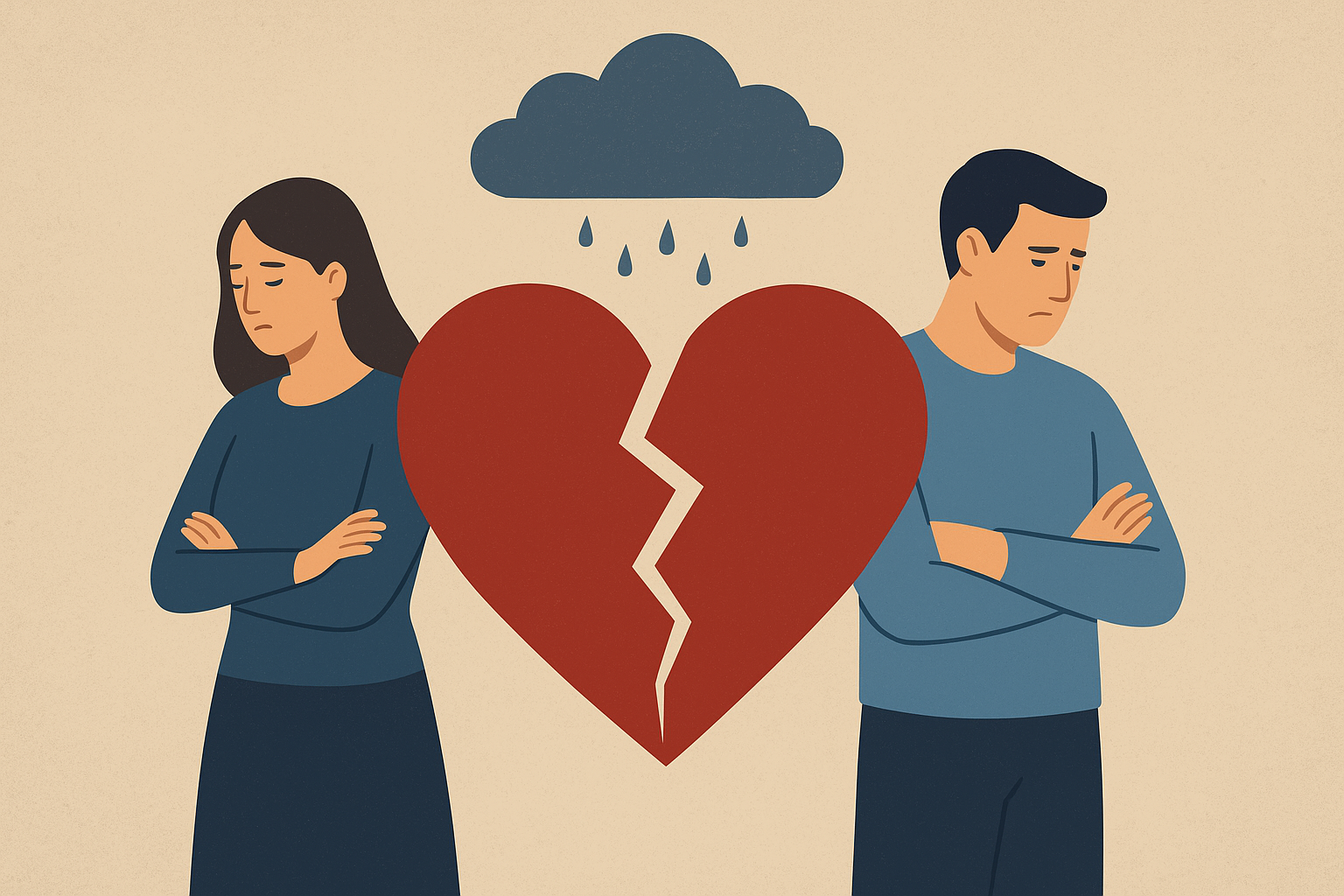
Irretrievable Breakdown of Marriage — When the Marriage Is Dead but Not Yet Legally Over ?
A marriage is built on companionship, trust, and shared life. But what happens when none of these survive — when a couple continues to be married only in law, but not in life?
Indian matrimonial law recognizes several grounds for divorce — cruelty, adultery, desertion, conversion, and so on. But sometimes, a marriage ends in every way except legally. No violence, no adultery, no visible fault — just complete emotional and practical separation.
This situation is called the “irretrievable breakdown of marriage.” It refers to a marriage that has died in substance but survives in form — where the bond has dissolved beyond repair, and continuing it serves no purpose but prolonged suffering.
1. What Is “Irretrievable Breakdown of Marriage”?
“Irretrievable breakdown” means that the marriage has completely and permanently collapsed, and there is no chance of reconciliation between the spouses.
It is a recognition of reality — that the law should not compel two people to remain married when the essence of marriage has vanished.
The concept is rooted in the idea that marriage is a partnership of life. If that partnership ceases to exist in fact, forcing it to continue in law becomes an empty formality and injustice.
2. Origin and Legal Status in India
Unlike cruelty or adultery, irretrievable breakdown is not yet a statutory ground for divorce under the Hindu Marriage Act, 1955 or other personal laws.
However, the Supreme Court of India has repeatedly recognized it as a valid ground in exceptional circumstances, using its extraordinary powers under:
- Article 142 of the Constitution of India — which allows the Supreme Court to pass any order necessary “to do complete justice.”
Over the years, the Supreme Court has granted divorce on this ground when marriages were found to be emotionally dead and beyond revival, even though no specific legal fault could be proved.
3. Key Supreme Court Judgments
(i) Naveen Kohli v. Neelu Kohli (2006)
The Court observed that when a marriage has broken down irretrievably, it is futile to prolong it. The Court recommended that Parliament amend the law to include this as an independent ground for divorce.
(ii) K. Srinivas Rao v. D.A. Deepa (2013)
The Court held that long separation and absence of any possibility of reunion clearly indicate an irretrievable breakdown. Continuing such a marriage causes cruelty in itself.
(iii) R. Srinivas Kumar v. R. Shametha (2019)
The Court reiterated that when both parties have lived apart for long years and all efforts for reconciliation have failed, it is proper to dissolve the marriage under Article 142.
(iv) Shilpa Sailesh v. Varun Sreenivasan (2023, Constitution Bench)
This landmark case reaffirmed that the Supreme Court has the constitutional power to grant divorce on the ground of irretrievable breakdown, even without mutual consent, provided:
- The separation has been long and complete,
- There is no chance of cohabitation, and
- Continuing the marriage would only perpetuate misery.
This decision brought clarity and authority to the concept.
4. The Current Legal Position
While lower courts (Family Courts, High Courts) cannot independently grant divorce on this ground, the Supreme Court can — and has done so in multiple cases.
Thus, irretrievable breakdown is now a judicially recognized but constitutionally limited ground.
However, the constant recommendations from the judiciary to Parliament have kept alive the debate on whether India should formally adopt a “no-fault divorce” system, as many modern countries have done.
5. Why This Concept Matters
In many marriages today, especially in urban and NRI contexts, couples may live apart for years with no hostility — only indifference. Litigation continues merely because one spouse refuses consent, often as a tool of control, revenge, or leverage.
The doctrine of irretrievable breakdown helps such individuals find dignified closure when reconciliation is genuinely impossible. It recognizes that marriage cannot be preserved by law when affection and companionship are gone.
The Supreme Court has called it “the judicial acknowledgment of truth.”
6. Conditions Courts Usually Consider
Though not formally codified, courts typically assess:
- Duration of separation: Usually 5 years or more.
- Attempts at reconciliation: Whether mediation, counselling, or negotiation have failed.
- Conduct of parties: Whether the spouse opposing divorce is doing so out of malice or for genuine reasons.
- Children’s welfare: Courts ensure that custody and maintenance arrangements are settled before granting divorce.
- Financial fairness: The spouse seeking divorce must ensure fair settlement or support for the other.
Only when these factors align, and the marriage is clearly beyond restoration, do courts grant divorce on this ground.
7. Evidence That Supports Irretrievable Breakdown
- Long-term physical separation (years of living apart).
- Absence of communication, cohabitation, or conjugal relationship.
- Multiple failed reconciliation or mediation attempts.
- Pending litigation with no progress for years.
- Conduct showing deep-seated hostility or indifference.
The evidence must collectively show that there is no possibility of normal marital life being restored.
8. Why It Is Not Yet a Statutory Ground
Despite judicial approval, Parliament has not yet amended the Hindu Marriage Act to include this ground. The main reason is the fear of misuse — that an easy “no-fault” exit could weaken the institution of marriage or disadvantage women who depend financially on their spouses.
However, supporters argue that making people stay legally married against their will is a greater injustice and often leads to prolonged psychological suffering.
9. Global Perspective
Many countries, including the UK, USA, Canada, Australia, and South Africa, recognize “irretrievable breakdown” as the primary ground for divorce. In these systems, the focus is not on blaming either party but acknowledging that the marriage has failed beyond repair.
India, though slower in adopting this reform, is gradually aligning toward it through progressive judicial intervention.
10. When to Consider This Ground
If:
- You and your spouse have been separated for several years,
- All reconciliation attempts have failed,
- There are no pending hopes of reunion, and
- The continuation of the marriage only prolongs hardship —
You may consider approaching the Supreme Court through a special leave petition seeking divorce on the ground of irretrievable breakdown of marriage under Article 142.
It requires precise drafting and strong evidence of long separation and emotional disconnection.
11. In Conclusion
Marriage, like life, has both a heart and a form. When the heart of the marriage — companionship, trust, and togetherness — has stopped beating, the law cannot pretend that it still lives.
The doctrine of irretrievable breakdown is not about abandoning marriage easily; it is about ending a relationship that already ended in spirit.
It is a humane recognition that justice sometimes lies not in preservation, but in release.
“A marriage may die long before it is buried in law — irretrievable breakdown is the law’s way of granting it peace.”